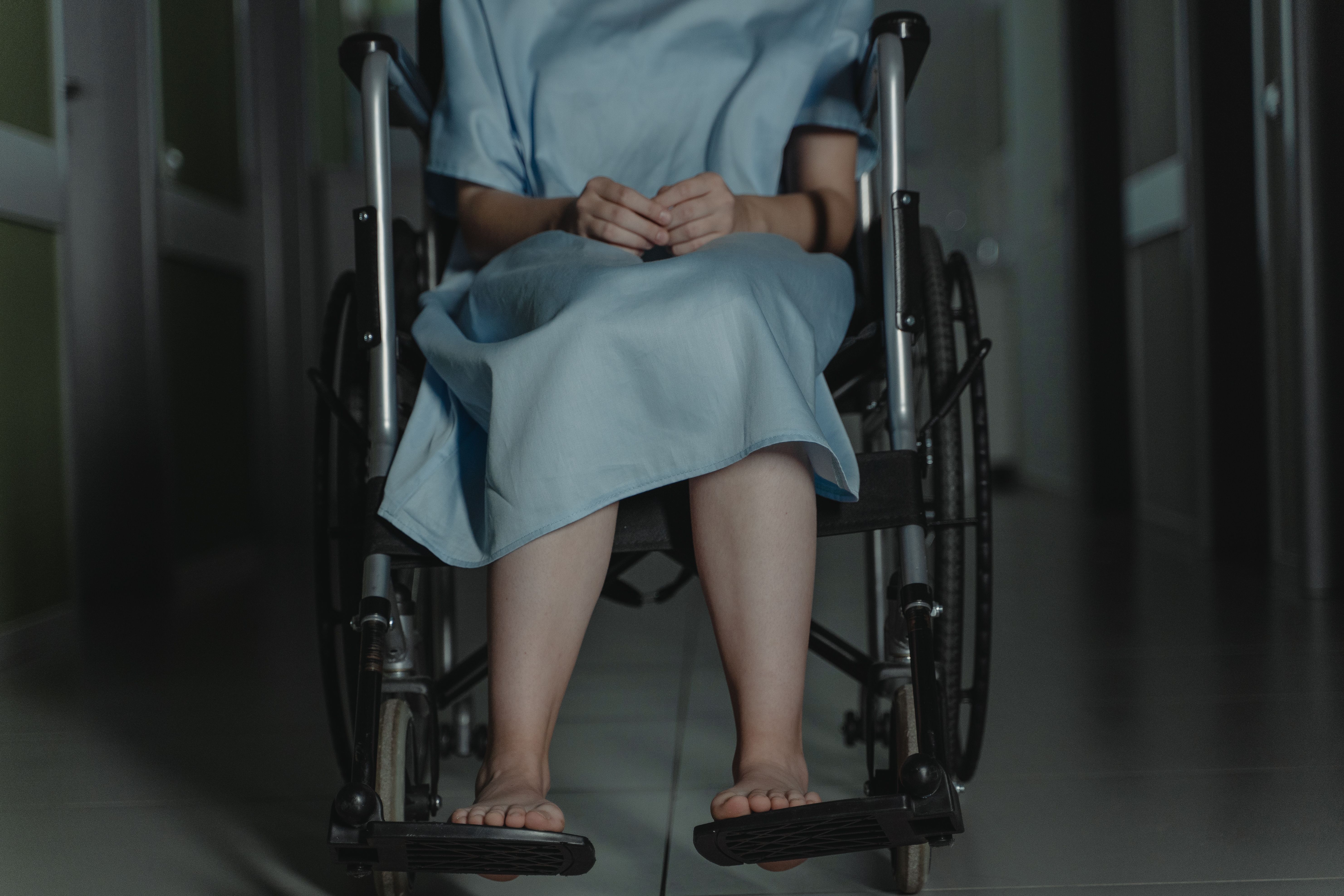
The Lindsay Clancy trial was meant to address a legal question: Was Lindsay criminally responsible when she killed her three children? Instead, week after week of testimony exposed something much bigger. It exposed the cracks in psychiatric prescribing, postpartum mental healthcare, and how fragmented care becomes when multiple providers and medications enter the picture.
Examining these failures does not diminish the unimaginable tragedy of what happened to Cora, Dawson, and Callan. But if we refuse to examine what happened to their mother in the months leading up to their deaths, we lose an opportunity to ask questions that could protect another family.
Lindsay Was Asking for Help
One of the most striking things about this case is how much help Lindsay sought. This was not a woman hiding her struggle. Her medical history presented at trial showed repeated psychiatric appointments, medication changes, emergency care, perinatal mental health treatment, hospitalization, and continuous reports of worsening symptoms.
Her records described insomnia, severe anxiety, depression, brain fog, numbness, fear, difficulty bonding with her baby, and feeling overwhelmed. At different points, she described being afraid of suicidal thoughts and feeling as though she was going to die. Her psychiatrist testified that Lindsay's condition deeply concerned her. She reached for every resource society tells struggling mothers to reach for, yet she continued deteriorating.
The Impact of Psychiatric Polypharmacy
During the months preceding the deaths of her children, Lindsay was exposed to numerous psychiatric medications and repeated drug changes. Trial testimony described Zoloft, Ativan, Prozac, Trazodone, Remeron, Klonopin, Valium, Seroquel, Amitriptyline, and other medications at different points in her treatment.
And there were clear, documented problems:
- Zoloft: Her psychiatrist testified that after her dosage was increased, Lindsay reported feeling awful, worsening insomnia, persistent crying, brain fog, and severe anxiety. She became terrified of starting another medication.
- Seroquel: Lindsay reported that Seroquel seemed to be making her more depressed, and her husband expressed concern that her deterioration might be connected to the drug.
- General Symptoms: She repeatedly reported numbness, difficulty sleeping, racing thoughts, brain fog, fear, and disconnection.
When a patient deteriorates during repeated medication exposure and drug changes, medicine desperately needs to confront a critical question: At what point do we stop asking what new psychiatric disorder the patient has and start seriously investigating whether the treatment itself may be contributing?
The Critical Gap: Missing Focus on Akathisia
This is especially important when discussing akathisia. Akathisia is not simply "anxiety" or ordinary restlessness; it is a recognized adverse effect that can manifest as an extraordinarily distressing internal and physical state.
Throughout Lindsay's treatment, symptoms were repeatedly interpreted almost exclusively through a psychiatric lens. One of the greatest gaps in this trial was missing an expert witness deeply specialized in psychiatric drug adverse effects, withdrawal, akathisia, polypharmacy, and the neurological consequences that occur when these drugs are rapidly introduced, increased, decreased, switched, and combined.
Without that expertise, worsening symptoms risked being misdiagnosed as worsening mental illness, leading to a dangerous prescribing cascade: another medication is added or changed, and the very treatment intended to help further complicates the clinical picture.
Medical Clearance and the Pressure to Comply
There was another part of the testimony that deserves far more attention. Lindsay was trying to return to work, and Dr. Jennifer Tufts testified that she provided a return to work letter on November 22, 2022. However, Lindsay needed formal medical documentation from her doctor to authorize time off from work and justify her medical leave.
When a struggling mother must rely on the medical system to validate her need for leave, it can create a heavy pressure to appear completely cooperative. A patient may feel forced to comply with every medication recommended, no matter how awful it makes her feel, simply to satisfy the system, maintain her medical leave, and prove she is trying to get help.
By December 21, Lindsay had still not returned to work and reported she was not feeling better. This sequence forces us to look beyond medications and ask what happens when taking drugs becomes a prerequisite for securing basic time away to heal, replacing true patient choice with forced compliance.
Fragmented Care and Systemic Pressure
The testimony also revealed how fragmented her treatment became. One clinician testified that she had not spoken with one of Lindsay's psychiatrists and did not have records from other facilities involved in her care.
A postpartum mother is rapidly deteriorating while moving through psychiatric providers, with medications being started, stopped, increased, decreased, and switched. Yet the people treating her did not have the complete picture. How can anyone adequately evaluate whether a symptom is the underlying condition, an adverse drug effect, withdrawal, rebound, an interaction between medications, sleep deprivation, or postpartum illness without seeing the entire timeline?
Furthermore, society routinely medicalizes distress in mothers. Lindsay had three young children, including an infant, and testimony described her feeling overwhelmed after her husband returned to work. She was struggling to sleep, eat, think, and bond, all while managing the enormous responsibility of motherhood. Yet society responds to struggling mothers by giving them appointments and prescriptions, then sending them back into the same environment carrying an impossible load.
A Systems Failure Beyond the Courtroom
The prosecution argued that Lindsay's actions demonstrated planning and intentional conduct, while the defense argued that severe postpartum mental illness, psychosis, and the effects of extensive psychiatric treatment profoundly altered her mental state.
The jury ultimately could not reach a unanimous verdict, and Judge William Sullivan declared a mistrial on September 4, 2026, with reporting indicating 11 jurors favored finding Lindsay not criminally responsible while one disagreed. Following the mistrial, Massachusetts Governor Maura Healey proposed expanded postpartum support, including voluntary home nurse visits and additional perinatal mental health resources. That alone tells us this case exposed gaps that cannot be solved by telling mothers to simply "ask for help."
Preventing another tragedy requires us to look at everything that came before this one. We must talk about:
- The risks of psychiatric polypharmacy and rapid medication changes.
- Training clinicians to recognize akathisia and drug induced adverse reactions.
- Ensuring complete medical record integration across all prescribers.
- Providing actual physical, emotional, financial, and caregiving support for mothers, rather than relying solely on medication.
Lindsay Clancy reached for help again and again. She sought psychiatric treatment, received perinatal care, entered McLean Hospital, and stayed in continuous contact with clinicians, yet the complete picture still was not seen. The most frightening lesson of this case isn't what happens when someone refuses help, but what can happen when someone is begging for it and the systems around them still fail to understand what is happening.
One Love,
Malissa